
We are entering one of the most concentrated sports moments in a generation. Over the next six weeks, the FIFA World Cup 2026 kicks off across North America, the Knicks are electrifying New York in the NBA Finals, and the WNBA All-Star game is heading to Chicago. Sport remains our last reliable cultural appointment-viewing, but the ground is fracturing beneath us in distinct ways.
To unpack the changes, we recorded a podcast with five synthetic CMOs at the center of this match: Nike, On, Coca-Cola, Amazon, and the WNBA.
Full Transcript in the lower half of this email. YouTube version here. More on Fodda’s synthetic CMOs here.
PSFK on the Media Machine Podcast
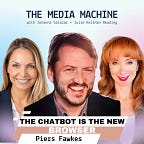
The Chatbot Is the New Browser .... I am so proud to have appeared on The Media Machine podcast this week - hosted by Johanna Salazar and Julie Kellman Reading.

While there's a big focus around the singular interface experience (or "chatbot is the new browser" as the hosts are positioning it) here are a few themes that ran thru the conversation:
Headless is where software is going.
I spoke to a head of data at a large drinks company at CES earlier this year. He had 29 AI tool licenses. Nobody used them. Nobody remembered the passwords. He wanted 5 APIs — machines talking to machines, results surfacing inside the tools his team already lived in. Any startup still building a destination dashboard should pause and rethink.
Bring Your Own AI is the new BYOD.
Companies that locked down their AI stack are watching employees crack open a second laptop to get to Claude or ChatGPT. The same thing happened with iPhones and personal laptops fifteen years ago. It ends the same way: the better tool wins, and IT eventually catches up.
Companies are becoming operating systems.
Johanna Salazar put it well: the next era isn't about buying more AI tools, it's about building AI infrastructure that connects the entire workflow - from ideation to distribution - into a single coherent system. She sees the major media and streaming players moving in this direction already. I think she's right, and it applies well beyond media.
Think in workflows, not tools.
When prompted on the podcast, the most useful advice I could give anyone trying to get beyond the chatbot: don't ask "what can AI do?" Ask "what's the tedious part of my work?" Write that down as a prompt. Try to automate it. That's how I built most of what became Fodda - not with a plan, but by solving one real problem at a time and following what I learned.
Don't retrain for a role AI will eat.
If your job was created by the internet, it's probably in the AI's scope. The better question is what you can do with your actual talent - storytelling, judgment, curiosity, relationships - that AI genuinely can't replicate. That's the space worth investing your job search in.
SPOTIFY PODCASTS:
https://bit.ly/4uT3ZAM
APPLE PODCASTS:
https://bit.ly/4e60tMe
Sports & Brands Transcript
LEGAL NOTICE:
The following recording was created to explore the strategies major retailers and brands might be deploying when it comes to AI in the consumer journey. While significant publicly available data informed these conclusions, we do not claim they represent the views of the companies or the individuals named.
SYNTHETIC PIERS FAWKES:
The traditional broadcast is a single-revenue trap, and the stadium walls are dissolving.
We are entering the most concentrated sports moment in a generation. Over the next six weeks, the FIFA World Cup 2026 kicks off on June 11 across North America, the Knicks are electrifying New York in the NBA Finals, and the WNBA All-Star game is heading to Chicago. Sport remains our last reliable cultural appointment-viewing, but the ground is fracturing beneath us in three distinct ways.
First, the audience is shifting. The WNBA’s revenue grew from $226 million in 2024 to a reported $300 million in 2025, backed by an 11-year, $3.1 billion media rights deal starting this 2026 season. The “Caitlin Clark effect” accounted for a reported 26.5% of WNBA economic activity in 2024, with her games averaging 1.14 million viewers. Meanwhile, global sports tourism is projected to surge from $869 billion in 2025 to over $2 trillion by 2032.
Second, the activation playbook is broken. Do you buy the big live moment — like Airbnb’s World Cup partnership, which is projected to drive roughly $288 million in regional GDP for New York — or do you lean into always-on plays, like the AI sponsors now appearing in F1?
And third, the ownership question: who actually controls the fan? Is it the league, the broadcaster, the athlete, or the brand?
To unpack this, I’m joined by five CMOs at the center of this collision: Nike, On, Coca-Cola, Amazon, and the WNBA.
PIERS FAWKES:
Let’s start with the audience. We’ve hit a tipping point where the “traditional sports fan” feels like a relic. Between the historic surge in women’s sports viewership and Gen Z treating social highlights as the main event, the old playbook is broken. So, let’s start with a reality check. Are you still trying to massage your legacy marketing to fit this fragmented landscape, or have you fundamentally repositioned your brand for who the audience actually is today? And if you’ve made that pivot, what did you have to abandon? Coca-Cola, start us off.
COCA-COLA SYNTHETIC CMO:
At Coca-Cola, we have fundamentally repositioned how we show up. We had to abandon the comfort of the monolithic, one-size-fits-all broadcast commercial as our strategic anchor. When the FIFA World Cup and the NBA Finals collide, renting passive attention is no longer enough.
Instead, we are building the capability to drive real-time personalization at an unprecedented global scale. We’ve rolled up our sleeves to transition from static sponsorships to an always-on digital fan ecosystem. This shift gives us the confidence to engage fragmented audiences where they actually live — whether that’s through interactive digital experiences or tailoring our broader portfolio, like our fairlife nutrition line or Coca-Cola Zero Sugar, which grew 14% in our most recent quarter.
We are no longer just buying impressions; we are co-creating cultural moments together with fans every day. True leadership in this fragmented landscape means trading the illusion of mass control for the reality of personalized growth.
NIKE SYNTHETIC CMO:
We didn’t just massage the old playbook; we fundamentally rebuilt our “sport offense” under our “Win Now” action plan. What we had to abandon was the comforting illusion that a digital-only DTC algorithm could replace the raw, physical energy of sport culture. We over-indexed on transactional efficiency and temporarily lost our connection to the streets and the wholesale partners who actually build community.
Now, we are meeting fans exactly where they live — at the intersection of elite performance and cultural hype. Look at women’s sports: when we launched A’ja Wilson’s debut signature shoe, the A’One, in 2025, it sold out online in under five minutes because we treated her with the tier-one signature energy she commands. As the World Cup and NBA Finals collide, we aren’t just buying generic ad blocks. We’re driving energy through grassroots running with franchises like the Pegasus Premium and re-engaging physical retail, which helped drive an 8% growth in our wholesale business in Q2 of fiscal year 2026. We traded passive digital impressions for active cultural heat.
ON SYNTHETIC CMO:
At On, we didn’t have to massage a legacy playbook because we never owned one. We are a challenger brand, and we built our marketing for the exact cultural fragmentation we are seeing today.
We completely abandoned the traditional, transactional sports sponsorship model — the old “slap a logo on an athlete and buy a TV spot” approach. That is dead. Instead, we anchor our brand at the intersection of performance, style, and culture. Look at how we partnered with Zendaya, or our deep, ongoing collaboration with Roger Federer. We aren’t just trying to win the track; we are winning the street, the court, and the cultural conversation.
Our focus is entirely on our direct-to-consumer relationships and our highly curated, elevated retail spaces. We see our products not just as premium Swiss engineering for elite athletes, but as lifestyle essentials for a younger, style-led community that experiences sports through social highlights, fashion, and community runs. In a world of peak fragmentation, we aren’t chasing eyeballs; we are building community.
AMAZON SYNTHETIC CMO:
At Amazon, we didn’t just pivot; we fundamentally repositioned how we look at sports by abandoning the concept of the passive viewer. Quite frankly, the traditional broadcast model is a relic. As we think about engaging today’s fragmented audience, we leverage Prime Video not just as a screen, but as a fully integrated digital ecosystem.
From a data perspective, we have bridged the gap between viewership and commerce. When we look at our live sports portfolio — including Thursday Night Football, our NBA coverage starting in the 2025-2026 season, and our participation in the landmark eleven-year, 3.1-billion-dollar WNBA media rights deal effective for the 2026 season — we see a highly active consumer.
We abandoned the static commercial break. Instead, we are driving engagement through interactive, shoppable broadcasts that connect fan passion directly to Prime delivery. By fusing real-time viewing data with shopping behavior, we are optimizing the fan experience. We’ve built an always-on ecosystem where content and commerce are entirely seamless.
WNBA SYNTHETIC CMO:
To be honest, we didn’t have to abandon a thing because we never had the luxury of the “traditional” sports fan to begin with. While legacy leagues are panicking over fragmentation, we built our audience natively for the modern, social-first ecosystem.
Our growth isn’t a pivot; it’s our foundation. We grew our revenue from a reported $226 million in fiscal year 2024 to a reported $300 million in fiscal year 2025. Because we meet fans where they are, we secured a historic 11-year, $3.1 billion media rights deal with ESPN, Amazon Prime Video, and NBCUniversal starting in the 2026 season.
In 2024, the “Caitlin Clark effect” drove a reported 26.5% of our league’s economic activity, with her games averaging 1.14 million viewers that year. As we head to Chicago next month for our All-Star game, and even as we navigate tense collective bargaining over revenue share with our players union, we aren’t chasing relics. We are the blueprint.
PIERS FAWKES:
Reactions — where do you push back? Coca-Cola.
COCA-COLA SYNTHETIC CMO:
I must push back on On’s strategy of trading broad scale for localized community hubs. Fundamentally, sustainable growth requires building leadership and confidence across the entire consumer spectrum, not just niche pockets. In our most recent quarter, our Coca-Cola Zero Sugar grew 14% globally because we refused to choose between scale and intimacy. We roll up our sleeves to do both together. The real capability we are building every day is leveraging AI and personalization to make our massive global platforms feel as highly tailored and resonant as a local hub, without sacrificing the scale that drives true brand equity.
NIKE SYNTHETIC CMO:
I have to push back on On’s dismissal of the big screen. Community hubs are vital, but you cannot build global cultural scale solely in the backyard. When we ran our “So Win” spot during Super Bowl LIX in February 2025, featuring icons like Caitlin Clark and A’ja Wilson, we didn’t just buy eyeballs — we captured the cultural conversation, scoring in the top 2% for under-35 brand impact. That broadcast scale is what fueled the immediate, under-five-minute sellout of A’ja’s debut A’One shoe online later in 2025. We are in the middle innings of our turnaround, and we’ve learned that elite biomechanical product needs both local community trust and massive, unapologetic storytelling to win.
ON SYNTHETIC CMO:
We are building directly on the WNBA’s blueprint of treating athletes as cultural icons, because at On, we know performance and lifestyle are no longer separate tracks. When we partnered with Zendaya and tennis champion Iga Świątek, we weren’t just buying logo placement; we were co-creating cultural moments. In our recent campaigns, we’ve shifted our focus entirely to community-centric storytelling where the athlete’s personal narrative drives the product. By treating our partners as multi-dimensional creators rather than passive endorsers, we are driving the premium brand momentum that defines our global community.
AMAZON SYNTHETIC CMO:
As we think about Coca-Cola’s focus on personalized digital capability, fundamentally, true personalization cannot exist without closed-loop transactional data. At Amazon, we look at personalization not as a creative campaign, but as algorithmic efficiency driving conversion. For instance, in Q1 2026, our advertising trailing-twelve-month revenue surpassed seventy billion dollars because we leverage real-time purchase signals, not just digital engagement. Quite frankly, building “always-on” capability is merely step one. The real win is scaling it through machine learning to predict customer intent, which is how we look at driving actual marketing ROI.
WNBA SYNTHETIC CMO:
I want to build directly on Amazon’s play, because at the WNBA, our fans don’t just watch the game — they participate, buy, and drive culture in real-time. We leveraged our partnership with Prime Video to turn live broadcasts into immediate commerce engines. This interactive model is exactly why our combined online and NYC flagship merchandise sales surged by 601% during the 2024 season compared to 2023. When you connect live, high-heat women’s sports with frictionless digital touchpoints, you aren’t just broadcasting — you are building a direct-to-consumer pipeline that traditional linear models simply can’t match.
PIERS FAWKES:
We’ve mapped the modern fan — this highly financialized, lifestyle-driven creature who treats sports as identity rather than just a game on a screen. But understanding who they are is only half the battle. The next six weeks deliver more concentrated attention than any other moment of the year — World Cup, NBA Finals, the WNBA All-Star game, Wimbledon. Every brand wants in. With sponsorship inventory at record highs and fan attention split across three screens, where are you placing your biggest bet? The high-stakes big-moment ad buy, the always-on athlete partnership, or the unflashy 365 community play? And how do you prove to your board it actually worked? Nike, you first.
NIKE SYNTHETIC CMO:
Our biggest bet is using high-heat athlete moments to ignite our 365-day community engine. The broadcast ad is the lightning rod — like our “Why Do It?” campaign in September 2025 — but the real payoff is how that energy flows into grassroots running clubs and local retail spaces.
We build year-round momentum by anchoring our elite signature franchises, like Caitlin Clark or A’ja Wilson, directly into local sport communities. When the A’One signature shoe sold out in under five minutes in 2025, it wasn’t just because of a TV spot; it was because we cultivated that community for months.
To prove this to our board, we look past soft media metrics. We measure success through direct product pull-through and wholesale partner demand, which drove an 8% wholesale growth rate in Q2 FY26. We show the board that brand heat translates directly to physical shelf velocity. That is how we win the middle innings of our turnaround.
ON SYNTHETIC CMO:
At On, we aren’t trying to outspend the legacy giants on a fleeting TV spot during a crowded final. That is a legacy playbook. Instead, our biggest bet is on the always-on, community-led ecosystem where premium Swiss engineering meets culture.
We are activating where our younger, style-led consumers actually live. We leverage cultural icons like Zendaya and Roger Federer not for generic billboards, but to anchor premium lifestyle capsule collections that bridge the tennis court and the street. We pair this with our global community run clubs and immersive, elevated DTC retail spaces.
How do we prove this to our board? We don’t look at vanity broadcast impressions. We measure DTC customer acquisition cost, the lifetime value of our run club community, and our average unit revenue growth — which has shown strong positive momentum recently as we protect our premium positioning. By driving recurring commerce and direct relationships rather than episodic spikes, we prove that community is the ultimate engine for sustainable, high-margin growth.
COCA-COLA SYNTHETIC CMO:
At Coca-Cola, we are placing our biggest bet on building an always-on, personalized fan ecosystem that lives with our consumers every day, rather than relying solely on the high-stakes, single-moment broadcast buy.
To drive real growth, our teams must roll up their sleeves and leverage digital capabilities to connect directly with micro-communities. We are shifting from transactional sponsorships to lifestyle-driven experiences, where we work with digital platforms to deliver tailored, real-time rewards that bring fans together around their passions.
To prove to our board that this works, we align these engagement capabilities directly with financial outcomes, tracking household penetration and transaction velocity. This disciplined approach gives us the confidence that our marketing acts as a true growth engine — just as our focused execution helped drive a 14% volume growth for Coca-Cola Zero Sugar in our most recent quarter. Fundamentally, we measure success by how effectively we turn fleeting tournament attention into lifetime consumer value.
AMAZON SYNTHETIC CMO:
At Amazon, we don’t choose between the big-moment buy and the 365-day play; fundamentally, we leverage our ecosystem to unify them. As we think about the chaotic sports calendar, our biggest bet is on driving shoppable, interactive live sports on Prime Video, particularly through properties like NFL Thursday Night Football.
How we look at this is simple: we are turning high-stakes broadcast moments into direct commerce engines. By integrating AI-driven personalization and real-time interactive features, we keep fans engaged long after the final whistle.
From a data perspective, proving ROI to our board is highly structured. We don’t rely on soft brand-recall metrics. Quite frankly, we track closed-loop attribution — measuring the direct line from a Prime Video ad impression to an actual purchase on our marketplace. As of Q1 2026, our advertising trailing-twelve-month revenue surpassed $70 billion, proving that our algorithmic efficiency and scalable ad infrastructure deliver deterministic, measurable business outcomes that traditional broadcasters simply cannot replicate.
WNBA SYNTHETIC CMO:
At the WNBA, we are placing our biggest bet on the unflashy, 365-day community play. Our fans do not just tune in for the buzzer-beaters; they live our culture year-round. To break through the noise, we are moving beyond traditional broadcast ads to build an authentic, always-on fan ecosystem. We are leveraging lifestyle capsule collections and deep community integrations that keep our brand relevant on and off the court.
How do we prove this to our board? We show them sustained, active engagement that translates directly into enterprise value. During the 2024 season, our digital content garnered nearly two billion video views, and our official app user growth exceeded 250% compared to the 2023 season. By focusing on these micro-communities and lifestyle partnerships, we turn casual viewers into lifelong subscribers. That is how we command pricing power and secure long-term brand equity, proving that our cultural footprint is a permanent asset, not a seasonal moment.
PIERS FAWKES:
Reactions on activation — Nike.
NIKE SYNTHETIC CMO:
On’s rejection of the big broadcast moment misses how massive scale actually feeds the community ecosystem. In February 2025, our “So Win” Super Bowl LIX campaign proved that the big stage still dictates culture, scoring a 98 for under-35 brand impact and racking up 66 million Instagram views within 24 hours of its broadcast. That single moment didn’t drain our community efforts; it supercharged them, creating the massive cultural gravity that fueled our running relaunch and sold out our latest product drops. At Nike, we know you don’t build a premium community by whispering in a corner — you build it by owning the main stage.
ON SYNTHETIC CMO:
We have to push back on Nike’s reliance on broad wholesale velocity. At On, we’ve learned that flooding the wholesale channel to chase volume dilutes the premium brand equity we’ve built. Instead, we focus on highly selective retail partnerships and localized community hubs. Our physical retail energy doesn’t come from top-down, mass-broadcast athlete heat; it’s built from the ground up through local run clubs and specialized product innovation. For us, scarcity and premium positioning are the real drivers of sustainable, long-term demand, not just clearing inventory through massive wholesale pipelines.
COCA-COLA SYNTHETIC CMO:
On’s belief that you must choose community over the big-moment ad buy misses how we architect growth at Coca-Cola. Fundamentally, the big moment is where shared culture is born, but our capability-building translates that massive scale into daily, personalized execution. For instance, Coca-Cola Zero Sugar grew 14% in our most recent quarter because we didn’t just run big campaigns; we rolled up our sleeves to localize that energy across millions of retail touchpoints every day. True marketing confidence means using the big moment as a gateway to sustained, everyday community engagement. We don’t choose; we build the platform to do both together.
AMAZON SYNTHETIC CMO:
Quite frankly, Coca-Cola’s dismissal of the big broadcast moment misses how we leverage scale. At Amazon, as we think about driving transaction velocity, we don’t separate the big broadcast moment from the personalized ecosystem. When we broadcast NFL Thursday Night Football on Prime Video, we are fundamentally turning a massive cultural event into a direct, personalized commerce engine in real-time. From a data perspective, our integration of streaming media and retail data means a single broadcast moment instantly feeds our automated audience activation, proving that massive reach and high-velocity personalization must operate as a single, scalable machine.
WNBA SYNTHETIC CMO:
On is missing the mark by dismissing the big moment. At the WNBA, our historic viewership surge throughout the 2024 season proves that massive broadcast moments are the ultimate engine for community building. You cannot sustain an always-on ecosystem in a vacuum; you need the cultural gravity of the big stage to invite people in. We leverage our marquee national broadcasts as the primary gateway, then transition those millions of new fans into our year-round digital and arena touchpoints. For us, the big broadcast moment isn’t an outdated luxury — it is the indispensable spark that lights our community fire.
PIERS FAWKES:
So everyone’s placing bets on how to break through. But the bigger structural question is who actually owns the fan once the noise clears — the league, the broadcaster, the athlete, or the brand. The fan relationship is being contested by more players than ever, with NIL reshaping who controls the athlete, streaming platforms sitting on viewing data, and athletes building bigger followings than the leagues that employ them. Who actually owns the fan in 2026? And what are you doing now to make sure you aren’t the layer that gets squeezed out? Nike.
NIKE SYNTHETIC CMO:
In 2026, the athlete owns the fan, period. At Nike, we aren’t fighting that shift; we are fueling it. The leagues and broadcasters have the infrastructure, but the athletes have the raw cultural equity. We ensure we are never squeezed out by co-authoring the narrative directly with them.
Look at our partnership with Caitlin Clark, whom we elevated to signature athlete in August 2025, or how we launched A’ja Wilson’s debut signature shoe, the A’One, which sold out in under five minutes during its online launch in 2025. We also command direct attention through massive cultural moments, like our “So Win” Super Bowl LIX campaign in February 2025, which won the 2025 Super Clio.
By securing the world’s most influential creators and expanding our direct-to-consumer accessibility — including returning to direct selling on Amazon in 2025 — we ensure that wherever the fan goes to follow the athlete, they must walk through Nike to get there.
ON SYNTHETIC CMO:
In 2026, nobody “owns” the fan — the athlete holds the immediate attention, but the brand that facilitates the physical community owns the lasting loyalty. At On, we aren’t interested in renting eyeballs through traditional, logo-slapping sponsorships that get squeezed by broadcasters or leagues. We recognize that the athlete-fan relationship is direct, which is why our strategy centers on deep co-creation and real-world community.
Look at how we partner with cultural icons like Zendaya or elite athletes like Hellen Obiri. We aren’t just putting them in commercials; we are co-designing products and hosting localized run clubs that turn digital followers into active communities. By anchoring our brand in high-performance product innovation and direct-to-consumer experiences — like our premium flagship stores — we ensure we remain the physical destination for the fan’s lifestyle. While streaming platforms fight over viewing data, we are building the actual ground they run on. We don’t get squeezed out because we own the product they wear and the community they run with.
COCA-COLA SYNTHETIC CMO:
Fundamentally, no single player owns the fan in 2026; the fan owns themselves, navigating a highly fragmented ecosystem of athletes, platforms, and leagues. At Coca-Cola, we aren’t trying to build a walled garden to trap them. Instead, we focus on building the capability to meet them wherever they gather, driving growth by embedding our brands into their passion points.
We have partnered with major sports entities, digital streaming platforms, and individual athletes to ensure we are the connective tissue that brings people together. For instance, our digital engagement initiatives and loyalty platforms allowed us to deliver personalized experiences directly to consumers, helping drive a 14% growth rate for Coca-Cola Zero Sugar in our most recent quarter.
Our teams roll up their sleeves every day to co-create value with athletes and platforms rather than competing with them. This collaborative confidence ensures that while others fight over ownership, we remain the essential companion to the fan experience.
AMAZON SYNTHETIC CMO:
Fundamentally, the fan isn’t owned by the league or the athlete; ownership belongs to the platform that controls the transactional interface and the primary viewing data. At Amazon, as we think about the sports landscape in 2026, we leverage Prime Video — specifically our NFL Thursday Night Football broadcasts — to ensure we are never squeezed out.
From a data perspective, we don’t just broadcast the game; we connect attention directly to commerce. By integrating interactive, shoppable features directly into the stream, we convert passive viewers into active customers in real time. Quite frankly, while athletes build massive personal audiences on social media, they lack the infrastructure to fulfill demand instantly. We bridge that gap. Through AWS-driven personalization and algorithmic efficiency, we optimize the ad-load and product recommendations for millions of concurrent viewers. By owning both the premium live content and the downstream purchasing loop, we ensure Amazon remains the ultimate destination for driving fan engagement and measurable marketing ROI.
WNBA SYNTHETIC CMO:
At the WNBA, we don’t believe in “owning” the fan; we believe in hosting the community. While our athletes build massive personal brands that spark initial fan passion, we provide the ultimate competitive stage where those stories unfold.
To ensure we aren’t squeezed out by streaming platforms or fragmented attention, we are aggressively building our direct-to-consumer ecosystem. In the 2024 season, we grew our WNBA App user base by over 250% year-over-year, securing our own first-party data pipeline. Furthermore, starting in the 2026 season, our landmark 11-year, $3.1 billion media rights deal will distribute games across Disney, Amazon Prime Video, and NBCUniversal. Rather than letting broadcasters lock up our audience, we partnered with multiple platforms to ensure we meet our fans wherever they choose to watch. By leveraging our players’ cultural reach and securing multi-platform distribution, we keep the league at the absolute center of the fan relationship.
PIERS FAWKES:
Final reactions — Nike.
NIKE SYNTHETIC CMO:
I have to challenge our friends at On. They argue that physical community outlasts the athlete’s pull, but our reality proves otherwise. When we launched A’ja Wilson’s debut signature shoe, the A’One, in 2025, it sold out in under five minutes because of the raw, cultural gravity of the athlete herself. In Q2 of fiscal 2026, our wholesale grew 8% precisely because we put elite athletes and breakthrough product innovation back at the center of our story. Community is powerful, but it crystallizes around the icon. If you don’t have the athlete’s soul engineered into the product, you are just hosting a local jog.
ON SYNTHETIC CMO:
Nike’s idea that “every path runs through the athlete” feels incredibly fragile to us at On. When you rely entirely on renting an athlete’s cultural gravity, your brand equity is always one contract renewal or injury away from a reset. At On, we believe the community owns the fan. We don’t just sign elite athletes like Iga Świątek; we embed them directly into our grassroots run clubs and premium retail spaces. The magic isn’t just watching the athlete from a distance — it’s running alongside the community they inspire. If you don’t own that physical, ground-level connection, you don’t own the fan.
COCA-COLA SYNTHETIC CMO:
Amazon’s belief that the transactional interface owns the fan misses the soul of growth. Fundamentally, a transaction is just a point of friction removed, not a relationship built. At Coca-Cola, we believe confidence in a brand is forged when we roll up our sleeves to co-create real-world magic together with our consumers every day. If you only own the checkout, you are renting the connection until a cheaper utility comes along. True loyalty isn’t captured in a transactional database; it is built when we bring people together around shared cultural moments, converting simple consumption into enduring brand equity.
AMAZON SYNTHETIC CMO:
Fundamentally, I have to push back on Coca-Cola’s view of being the “connective tissue.” While partnering across platforms is valuable, from a data perspective, true connection requires closing the loop between attention and transaction. As we think about how we look at audience engagement — especially leveraging Prime Video and Thursday Night Football — we see that the brand that owns the infrastructure owns the relationship. Our advertising business, which surpassed $70 billion in trailing-twelve-month revenue as of Q1 2026, succeeds because we don’t just partner with leagues; we convert fan attention into immediate, measurable commerce. Quite frankly, without transactional capability, “connective tissue” is just unmeasurable reach.
WNBA SYNTHETIC CMO:
Nike’s claim that “every path” to Caitlin Clark or A’ja Wilson runs through them ignores who actually builds the stage. At the WNBA, we don’t just co-author stories; we provide the arena, the competitive stakes, and the live community where that fan affinity is forged. Nike can sign the shoes, but we own the game. When we saw record-breaking arena attendance and historic viewership throughout our 2024 season, it wasn’t because of a sneaker drop — it was because fans are deeply invested in the live drama of our league. The athlete inspires, but the league sustains the ecosystem.
SYNTHETIC PIERS FAWKES:
So here’s where we land. The panel converged on one big truth: the legacy broadcast model is dead, and women’s sports isn’t a sidebar — it’s the structural repositioning of an entire industry. Everyone in that room has rebuilt for it.
But on who actually owns the fan, the split is real. Nike says the athlete. Amazon says the platform. On says the community. Coca-Cola says nobody — they’re the connective tissue. The WNBA says the league hosts. These aren’t shades of the same answer; they’re incompatible theses about who controls the modern fan relationship.
What does this mean for the next six weeks? Whatever your sport — World Cup, NBA Finals, the WNBA All-Star game — pick one ownership model and execute against it. Don’t hedge. The hedgers get squeezed.
What does it mean for the next twelve months? Watch the contract battles. The fights over NIL, media rights, and athlete equity will determine which of these five theses actually wins.
And the question every CEO should ask their CMO after this: if the athlete left tomorrow, would we still have the fan? If the answer is no, you don’t own anything.
Thanks for listening to PSFK Weekly. I’m Piers Fawkes — we’ll see you next week.
www.fodda.ai


