
Pop-Ups Are Popping Off
How brands and retailers win attention, trust, and loyalty with short-term physical experiences.
TL;DR
Pop-ups have graduated from novelty to precision engagement tool. Brands are using temporary physical experiences to prove product performance, concentrate demand, activate fandom, and convert footfall into lasting digital relationships rather than one-off transactions.
The seven strategies surfaced in the PSFK retail graph share a single logic: participation over display. Proof zones, scarcity shocks, fan venues, and community programming all replace passive browsing with something people actively enter, remember, and return to.
Physical presence is becoming a top-of-funnel asset. The smartest pop-up operators are measuring success in email captures, app installs, and retargeting reach, making experiential spend accountable in ways traditional retail never was.
I guess that maybe a decade ago pop-ups were treated as novelty retail or low-commitment real estate plays. What I’m seeing now is different…
… As I polish the contents of the next refresh of the PSFK Future of Retail graph there was one theme that seemed to keep, erm, popping-off.
What I noticed across retail, hospitality, sports, and culture, is that pop-ups have become precision engagement tools. They’re being used to prove performance, concentrate demand, activate fandom, test new behaviors, and convert physical presence into long-term relationships.
Based on patterns surfaced in PSFK’s graph (now available for your AI platform via Fodda), here are seven engagement strategies playing out through pop-ups and temporary physical experiences right now. - Piers

1. Proof Zones
Consumer trust has shifted from believing brand claims to experiencing the product themselves. Brands are now setting the stage for proof, not promises.
Product Trial “Proving Ground” Pop-Ups
Pop-ups are being designed to replicate real-world use conditions, allowing customers to validate performance in a single visit.
Cuts skepticism
Shortens decision cycles
Turns experience into evidence
Learn more:
Oysho’s –10°C ski-testing chamber in Madrid, Spain
New Balance Tennis Clubhouse pop-up with live court play and coaching in London, UK.
2. Scarcity Shocks
Consumers live in a world of infinite choice, so brands are winning by shrinking the decision-making window.
Ticketed IP Collectible Pop-Ups
With this strategy, the pop-up itself becomes the scarcity mechanism. Tickets, timed access, and exclusive drops concentrate demand without discounting.
Creates urgency without price erosion
Turns retail into an event
Feeds resale and collector culture
Learn more:
Nintendo London pop-up with advance tickets and first-release merch
Also in London: Studio Ghibli Knightsbridge pop-up with imported exclusives
Time-Boxed Venue Closures as Scarcity Marketing
One familiar but still effective ‘scarcity’ tactic we saw in the graph data: publishing the closing date as the headline.
Learn more:
Framed as a finite cultural moment, Bar Far in Rome led their opening promotion by talking about their closing date
3. Fan Fun
Brands and retailers are looking to monetize shared moments, not just products.
Pop-Ups as Fandom Venues
Temporary spaces have become places to watch, gather, celebrate, and belong. Retail is bundled with viewing, merch, and participation.
Converts solitary consumption into social energy
Creates merch moments tied to memory
Extends the cultural life of content
Learn more:
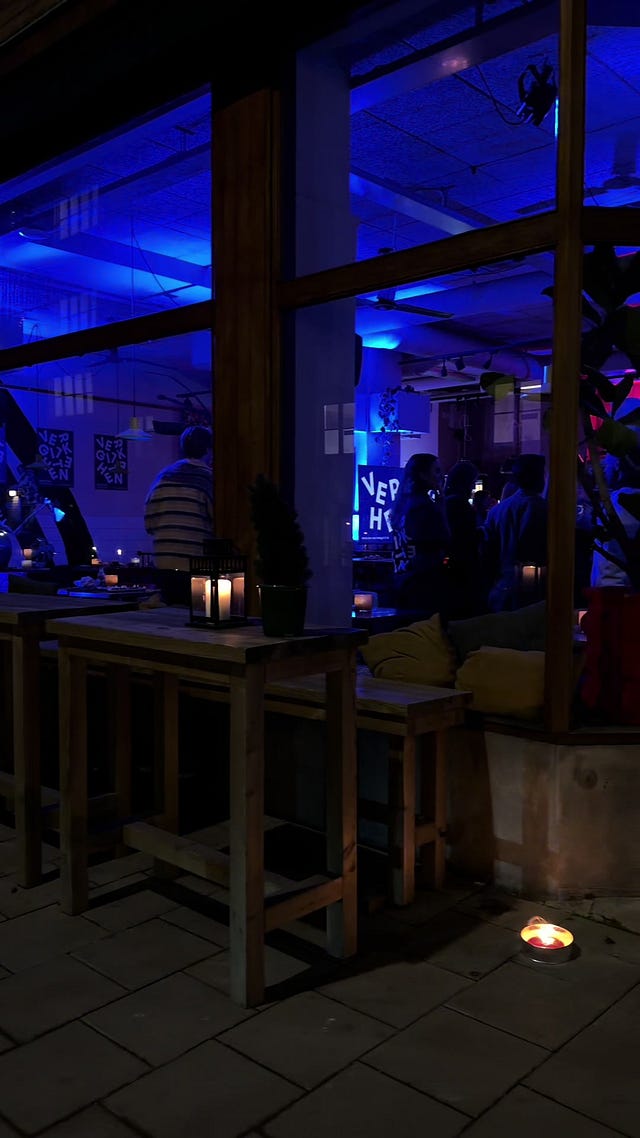
Samsung reality-TV viewing pop-up bar in Stockholm
Cash App × Sabrina Carpenter tour pop-up
 Tiktok failed to load.
Enable 3rd party cookies or use another browser
4. Familiar In The Unfamiliar
Consumers have always been looking for something new. With this ‘familair in the unfamiliar’ strategy, where something happens is the novelty, not just what happens.
Sports and Performance in Unexpected Venues
We saw in the PSFK Future of Retail graph how sport is being staged inside cultural, transit, and civic spaces rather than stadiums.
Reaches non-traditional audiences
Creates spectacle through contrast
Makes participation feel accidental and discoverable
Examples
Grand Sumo at the Royal Albert Hall
Climbing competition inside a Paris RER station

5. Pop Of Funnel
Instead of thinking that stores are the end point, smart retailers and brands turn that thinking on its head and see how to leverage the store for the top of the funnel. They are looking to use Physical Moments to feed Digital Relationships
Pop-Ups as eCommerce Acquisition Channels
Pop-up experiences are designed for email capture, app installs, and retargeting rather than pure sales.
Makes experiential spend measurable
Bridges physical excitement with long-term engagement
Extends ROI beyond footfall
Learn more:
In Seoul, e-commerce platform SSG.com drove sign-ups and post-event engagement through their pop-up museum experience.
6. Get Well
With this approach, wellness is embedded into everyday formats rather than treated as a destination service. People don’t want appointments - they want low-friction entry points and will choose pop-ups and temporary zones to find ways to get well.
Drop-in, social, repeatable
Normalizes wellness behaviors
Lowers the intimidation barrier
Learn more:
adidas Hybrid Hotel in London combining recovery and product trial
1N Labs pop-up in Shoreditch, London
7. Participate Together
Ok, ok it’s not really just a pop-up strategy because we see this in both permanent and temporary spaces but the idea here is that retailers and brands can’t capture attention through nifty displays and smart merchandising anymore. Attention can be captured with the spirt of doing something together.
Community-Programmed Niche Retail Venues
In some stores, programming is the product. Workshops, personalization, tastings, and events are the reason to visit. The idea here is that sales follow participation.
Feels local, human, repeatable
Replaces paid social with calendar-driven engagement
Creates reasons to return, not just browse
Learn more:
Rebel Nell just opened its 4th store in Grand Rapids, MI and the “women-owned social enterprise: use in-store workshops and design bars as the main way to engage community
Katie Loxton and Joma Jewellery’s ‘dual store’ embeds live personalization into retail moments in Milton Keynes, UK.
Final Takeaways
Hopefully these themes give you all at least something to pin a campaign to??
Across all of these examples, these themes play out:
Participation over display.
Proof over claims.
Scarcity over scale.
Shared moments over solitary consumption.
Pop-ups aren’t about being temporary anymore. They’re short, sharp interventions designed to do one thing very well: create belief, memory, and momentum.
FAQ
What has changed about how brands are using pop-up retail strategically? A decade ago pop-ups were low-commitment real estate plays or novelty formats. Today they function as precision engagement tools designed to do one specific thing well: build belief, create memory, or acquire a long-term digital relationship. The temporary format is now a feature, not a limitation.
How are brands using scarcity mechanics inside pop-up experiences? Ticketed access, timed entry, and exclusive product drops turn the pop-up itself into the scarcity mechanism, concentrating demand without discounting. Publishing a closing date as the opening headline is one of the simplest and most effective versions of this, framing the experience as a finite cultural moment rather than an open retail format.
Why are pop-ups increasingly being used as ecommerce acquisition channels? Physical experiences generate attention and emotional engagement that digital channels struggle to replicate. Forward-thinking retailers are designing pop-up visits around email capture, app installs, and retargeting sign-ups rather than immediate sales, extending the ROI of experiential spend well beyond the footfall of a single day.
What does community programming inside retail spaces actually look like in practice? Brands like Rebel Nell and Katie Loxton are replacing traditional merchandising with workshops, live personalization, and events as the primary reason to visit. The insight is that sales follow participation: when a store gives people something to do together, it creates reasons to return that no display or discount can replicate.
Turn Your AI into a Retail Trends Expert with Fodda
The pop-up strategies covered here are live inside the PSFK Future of Retail graph on Fodda, with case studies, brand examples, and trend clusters you can query directly inside your own AI. Stop pulling inspiration from scattered sources and give your AI a curated intelligence layer built specifically for retail.
Short, sharp, and built to create momentum. Just like the best pop-ups.