
TL;DR
The most durable brand strategies for 2026 are structural, not campaign-shaped. Rituals, collectibles, restoration, and accountability are not creative executions to bolt onto a media plan. They are operating models that build loyalty through repeated participation rather than repeated exposure.
Sustainability has crossed a threshold from promise to proof. Consumers and the signal data inside the Trends Graph are both pointing the same direction: corporate reporting is losing credibility and outcome-linked accountability, tied to real donations, local causes, and measurable restoration, is replacing it.
2026 is the year AI goes from model to agent, and agents need data. The shift from large pre-trained models to lighter, context-aware agents that access domain knowledge on demand is the infrastructure story underneath every brand activation strategy on this list.
How could the brand you work with connect more deeply with its audience in 2026?
In this email, I outline 10 ideas for what your organization can be next year.
To build them, I used a Trends Graph I created over the summer for Waldo’s AI insights engine. It captured hundreds of emergent signals across dozens of industries and audience groups. The graph is built on two decades of pattern recognition experience at PSFK, and so by applying that lens to the latest data, I surfaced the following ten activation strategies that feel relevant to almost any modern brand.
- Piers, PSFK
(If you want the deeper dive, you can read the full report, view the summary deck, or watch the webinar from last week)
1. Be A Ritual
To start, let’s look at this idea around helping people enjoy the small moments people repeat at daily or regular intervals. Across the Trends Graph, I saw brands elevating everyday actions into ceremonies - morning sets at Ryze, Chick-fil-A’s Day Bright Café, and a ‘At Home’ OOH campaign by Dunkin that aims to evoke home-centric rituals.
As retail innovation expert Michael Abata noted during last week’s webinar: “There’s real growth in these small, repeatable moments. This is where loyalty is built.”
The opportunity for brands in 2026: Don’t make campaigns; make repeatable brand touchpoints people want to return to.
2. Be A Revival
Heritage has power, but only when it’s reinterpreted for new audiences. The revival signals we tracked weren’t nostalgic throwbacks—they were recombinations: Volkswagen bringing Polo and GTI into the EV era, Paris bakeries resurrecting retro desserts with contemporary flavor logic.
As Mike Peck of Brooks Running put it when I spoke to him: “Revival isn’t pulling something from the vault. It’s bringing heritage forward with the people and technology shaping what’s next.”
For many brands, revival isn’t just cultural strategy—it’s accessibility strategy. Remixing the past opens the door to audiences who may never have seen themselves in the original.
3. Be Collectible
Collectibles have long been a way for people to express identity, join communities, and take part in cultural stories. Brands have been part of this fan culture and today, there’s an opportunity for connect by designing brand tokens of belonging. Across the data collected in the trends graph I saw brands using collectible formats to create access points into their worlds—from Swarovski x Minecraft to Kith x Nanzuka to hyper-creative K-pop Demon Hunter packaging.
Brand innovation expert Val Vacante said it best on the webinar: “The magic isn’t in the item. It’s in the moment, the memory, and the community that rallies around it.”
2026 advice: Treat collectibles not as merch but as cultural connectors.
4. Be Regenerative
Next year think about how your brand can give back more than it takes. Regeneration goes beyond reducing harm. It’s about designing products, systems, and supply chains that return value to people and the planet. The Trends Graph surfaced fashion partnerships like Under Armour x UNLESS creating plant-based performance wear, beauty brands such as McHan Organics turning cocoa waste into high-value skincare, and travel operators like Red Sea Global designing hospitality as ecosystem restoration.
For 2026: People want to see what your brand gives back, not the footprint it leaves behind.
5. Be Restorative
How can you brand help people tune back in and feel ready for what’s to come in 2026? People are choosing experiences that help them recover and feel restored. Robotic massage pods, red-light therapy booths, and recovery-first footwear are showing up in gyms, shops, workplaces, and travel hubs, turning everyday touchpoints into small restorative resets
As Donna Dei-Baning from the Martin Agency told our audience last week: “The most relevant brands will be the ones that help people feel restored. Brands that can actually calm the noise.”
Your 2026 challenge: Build restoration into your experience—products and moments that reduce friction, lower stress, and help people feel steady again.
6. Be Accountable
When it comes to an organization’s approach to sustainability, consumers want outcomes, not promises. In the data held within the Waldo trends graph, I could see a sentimental shift against corporate reporting and towards proof. CAVA tying openings to food-bank donations, PureGym connecting workouts to hyper-local causes.
As marketing expert and Giuseppe’s Glimpse Substack-newsletter author Giuseppe Stigliano told me last week: “The future belongs to brands that create profit and positive impact at the same time.”
In 2026, channel your brand’s sustainability strategy towards being accountable.
7. Be A Guardian
Wearables and IoT are re-emerging—not as gadgets, but as ambient layers of protection for the home, body, and journey. The strongest examples weren’t intrusive; they were subtle. Air quality monitors that disappear into furniture, mobility features like Heineken’s distraction-reducing mobile service in Finland, stress-detecting rings and silent sensors feeding coaching systems.
Giuseppe also noted: “Tech will become far more present but far less visible.”
Brands can take the same path: intelligence that reassures without overwhelming.
8. Be Driven
Vehicles are becoming adaptive environments—entertainment hubs, wellness pods, creative offices, and commerce portals. Huawei’s M9 is a preview of cabins that update constantly, read context, and shift modes based on need. Or take a look at Sharp’s concept car/living room.
Cars aren’t products anymore; they’re platforms. The brand opportunity lies in the layers built around movement: content, service, loyalty, identity.
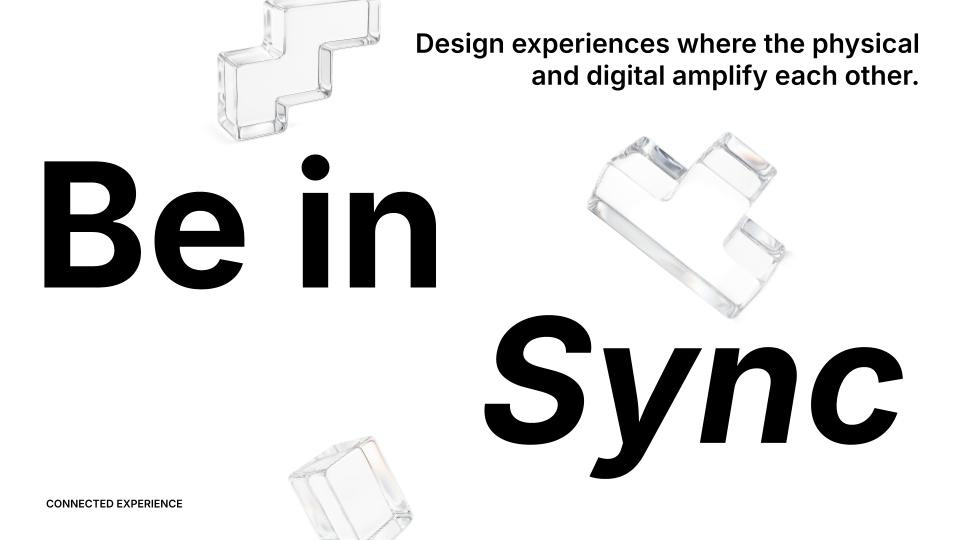
9. Be In Sync
2026’s best brand experiences will move fluidly—across channels, across mediums, and across time. Brands need to design for continuity and make sure they don’t separate the physical and digital consumer experience.
Examples in my research included Netflix House blending streaming worlds with physical play. Or in China drivers of new XPeng cars can launch emoji bombs visible only through the car’s AR windshield display(!)
People want moments that travel with them. An opportunity for the brand is to keep the story coherent as it jumps screens, spaces, and situations.

10. Be On The Fly
2025 was the year of agentic AI. 2026 becomes the year of AI data.
Brands will shift from using oversized, pre-trained models to employing lighter and more nimble agents that adapt in real time: models that learn what they need, when they need it, by accessing the right data at the moment of action.
That requires something simple but not yet common: fluid, on-demand access to trustworthy domain knowledge. This is where I see the future heading - and why I’ve been developing Fodda (ah-ha!): a marketplace for AI-ready knowledge graphs that plug directly into these emerging agent systems.
2026 priority: Equip your AI stack with differentiated, business-specific data. Think of it as the intelligence layer your agents will need in order to act with context. DM me on LinkedIn if you want to know more about this and Fodda.
FAQ
Why are repeatable rituals becoming a more valuable brand asset than campaign moments? Loyalty is built in the small, repeated moments people return to by choice rather than in the large moments brands manufacture for attention. The Trends Graph surfaced brands like Ryze and Dunkin building around morning rituals and home-centric touchpoints precisely because those formats create habitual return rather than one-time engagement.
What is the difference between a brand revival and nostalgia marketing? A revival brings heritage forward through the people, technology, and cultural context of the present rather than simply restoring something from the archive. The most effective examples in the research, from Volkswagen’s EV reinterpretation of the GTI to Paris bakeries recombining retro desserts with contemporary flavor logic, use the past as raw material rather than as the destination.
How are brands operationalizing accountability beyond sustainability reporting? The shift is from disclosed intentions to visible outcomes. Brands like CAVA tying new store openings directly to food-bank donations and PureGym connecting workout activity to hyper-local causes are building accountability into the business model itself rather than into the communications layer that sits on top of it.
What does the shift toward agentic AI mean for how brands should think about their data infrastructure? As AI moves from large pre-trained models toward lighter agents that access domain knowledge on demand at the moment of action, the competitive advantage shifts to whoever has the most trustworthy, business-specific data available for those agents to draw on. Generic model outputs will flatten. Differentiated knowledge graphs will be the intelligence layer that separates one brand’s AI capability from another’s.
Turn Your AI into a Brand Strategy Expert with Fodda
The ten strategies in this piece were surfaced from hundreds of signals inside a Trends Graph built on two decades of PSFK pattern recognition. Fodda makes that kind of curated domain intelligence available directly inside your AI, giving your agents the context they need to act with precision rather than generality.
2026 belongs to brands with better data underneath them. Start building that layer now.